BACK
Model Scenario
Increasing adoption of a redesigned tax planning experience.

Enterprise SaaS
Tax Compliance
Adoption
Accessibility
Company
Thomson Reuters
Role
UX Designer
Timeline
2025
Product
Indirect Tax Compliance
Executive Summary
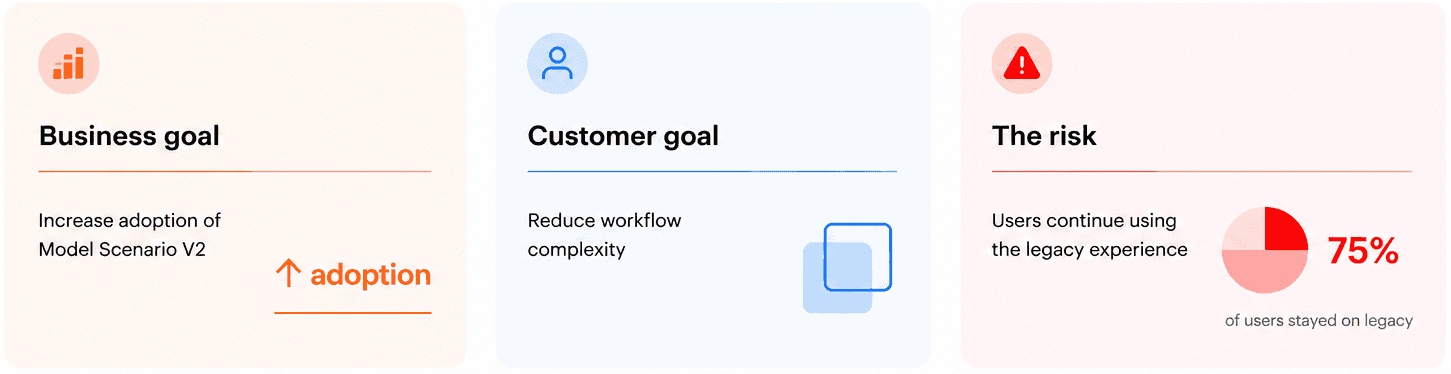
Model Scenario V2 was launched to improve usability and performance. However, post-launch analytics revealed low adoption, with most customers continuing to rely on the legacy experience.
I led a redesign initiative focused on improving discoverability, reducing cognitive load, and creating a smoother migration path.
Please reach out for a detailed case study.
Business challenge
Why this matter
The launch of Model Scenario V2 didn't deliver the adoption or experience improvements we aimed for.
Research & Discovery
What we found
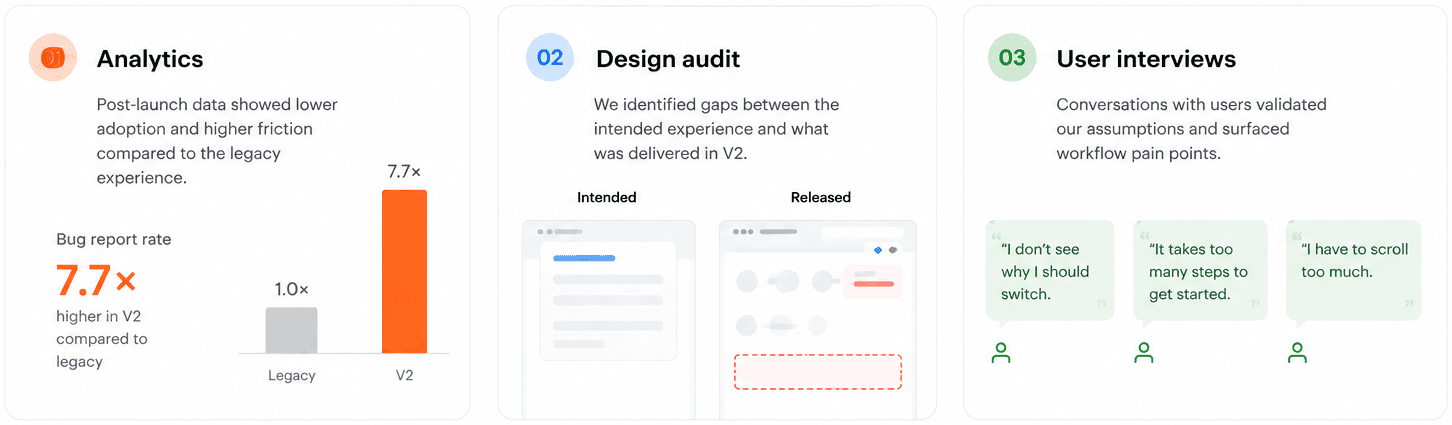
A combined method of quantitative data, design audit, and user feedback being used to uncover key issues holding back adoption.
FINdings
Key Findings
Research and discovery revealed four major barriers preventing users from adopting Model Scenario V2.
Finding 01: Users struggled to discover the new entry point.
Finding 02: The scenario creation workflow created excessive cognitive load.
Finding 03: Vertical and horizontal scrolling disrupted navigation.
Finding 04: Users preferred familiar workflows and resisted switching.
Design strategy
Design Principles
Rather than focusing solely on visual redesign, the project prioritized information architecture, content hierarchy, and audience-specific pathways.

Solutions
Final Solutions
Guided by research insights, the redesign focused on improving discoverability, reducing cognitive load, and creating a smoother migration path from legacy workflows.
Solution 1
Improve discoverability.


Solution 2
Simplify scenario creation and reduce vertical scrolling.


Solution 3
Reduce Horizontal Scrolling.

Impact
Measurable impact
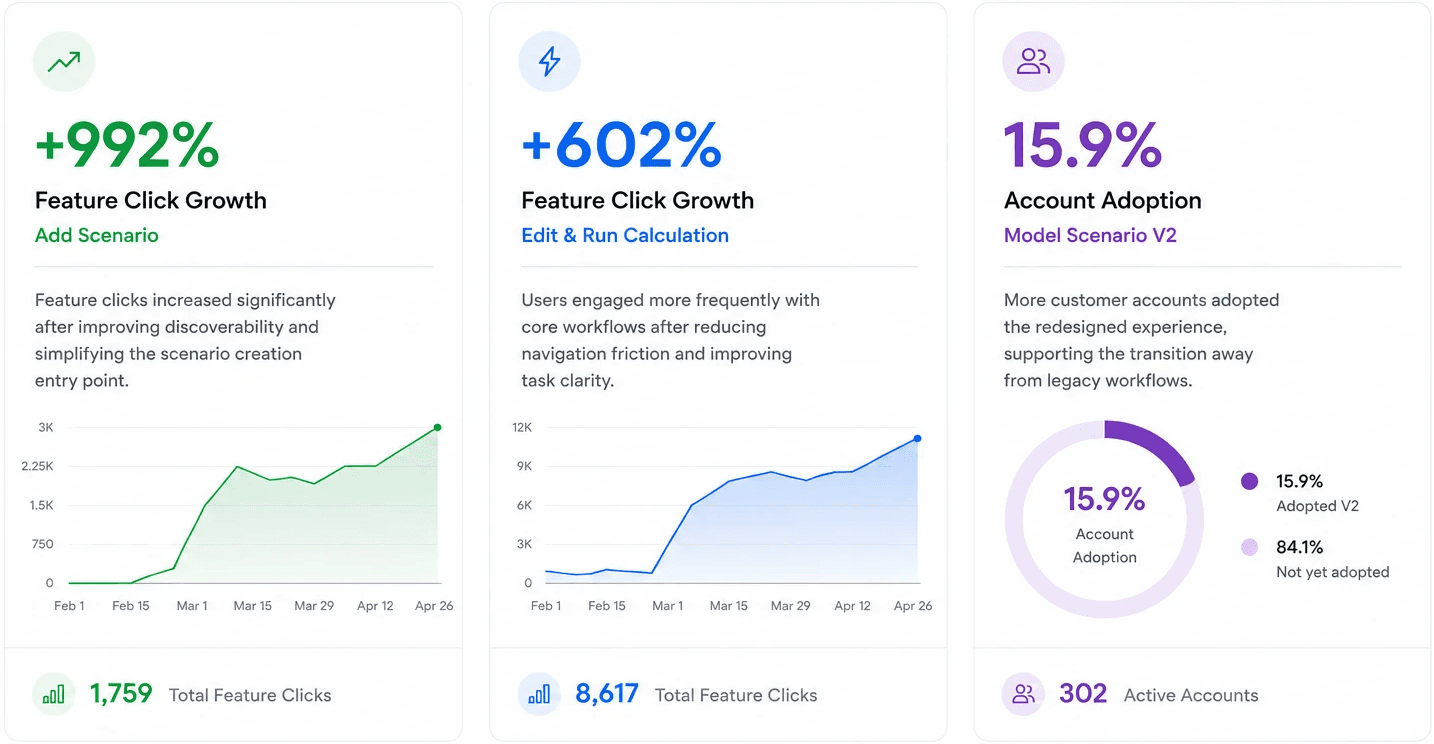
The redesign improved adoption, increased engagement with key workflows, and helped users transition more confidently to Model Scenario V2.
Reflection
Thoughts at the end
This project shifted my perspective on product adoption.
The challenge was not designing a better experience - it was helping users leave a familiar one.
Successful enterprise products require more than usability improvements. They require trust, continuity, and a thoughtful transition strategy that helps users embrace change with confidence.
More


